
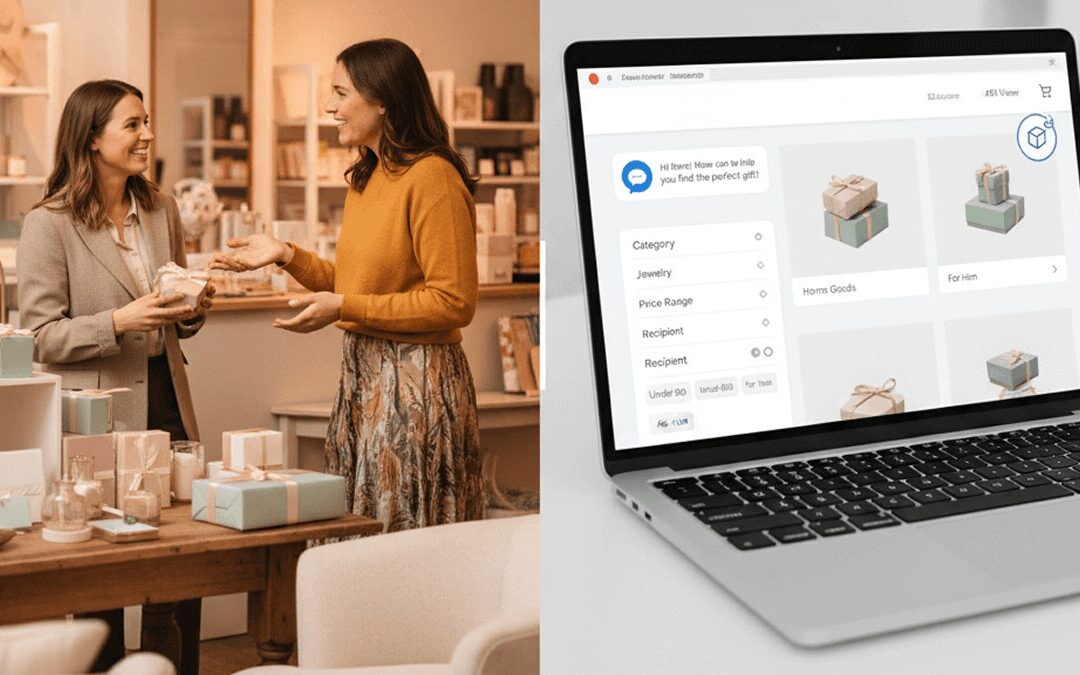
Shopping has always been more than just a transaction; it’s an experience. For decades, visiting a store was a social, sensory, and interactive experience. While online shopping has transformed convenience, speed, and reach, there’s a missing piece for many customers — the human touch.
Here, I explore the unique benefits of traditional shopping, the gaps in online shopping for everyday customers, and how technology can evolve to bring the best of both worlds together.
The Human Connection in Traditional Shopping
When you walk into a physical store, there’s an invisible warmth.
- Personal Welcome – A store manager or salesperson greets you, often by reading your mood and intent. This subtle acknowledgment creates belonging and trust.
- Guidance Without Effort – The staff understands your needs without you having to know product codes or technical details. “Looking for a gift for your mom?” They’ll guide you directly to something meaningful.
- Contextual Understanding – A good salesperson notices details: your age, style, even hints from your conversation about culture, religion, or lifestyle. They translate this into relevant product choices.
- Gift Personalization – When shopping for others (spouse, child, parent), the salesperson asks probing but caring questions: “What’s her favorite color?” “Any allergies?” This helps filter choices so you don’t feel lost.
- No Knowledge Barrier – Customers don’t need product expertise. The staff does the “homework,” explains pros and cons, and narrows down options. A less-educated or non-tech-savvy person can still confidently make the right purchase.
In short, the in-store experience democratizes shopping. Everyone, regardless of their background, can access the right product through human support.
The Gaps in Today’s Online Shopping
While e-commerce gives us speed, endless options, and 24×7 access, it also creates new hurdles, especially for non-tech-savvy or everyday customers:
- Overwhelming Choices: Online stores list thousands of products. Instead of reducing complexity, they push decision-making to the buyer.
- Research Burden: Customers must read reviews, watch YouTube videos, and compare technical specs to avoid making the wrong choice.
- One-Size-Fits-All Recommendations: Algorithms suggest products based on browsing history, not deeper context like family needs, allergies, or cultural preferences.
- No Emotional Guidance: An online platform doesn’t ask: “Is this for someone special?” or “Do you want something comfortable for your health condition?”
- Knowledge-Gap Punishment: A person with little product knowledge (e.g., an older parent buying a smartphone) is more likely to buy the wrong product online than in a store. Essentially, online shopping rewards the informed and punishes the uninformed—a major drawback compared to traditional retail.
Tracking the Digital Shift: Measuring the Rise of Online Shopping
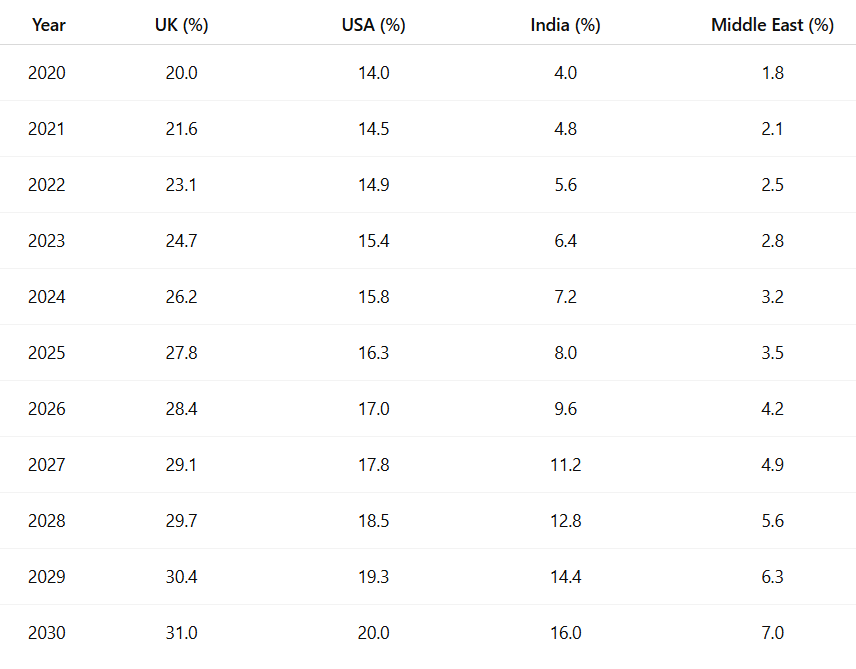
Let’s look at recent statistics on how much of all retail shopping is happening online: a year-by-year trend + forecast (2020 → 2030) for the UK, USA, India, and the Middle East. This will help you understand how low the numbers are online and how slow the projected growth rate is. Will current advancements help online shopping achieve these numbers?
Can Technology Recreate the Traditional Shopping Experience?
Below are a few trends we see now. With evolving technologies, the human touch of retail can return in new ways. Is it enough to accelerate the shift to online? Sometimes it may not be how advanced the technology is, but also how equipped and satisfied the user experience is.
Here are some possible innovations:
- AI-Powered Shopping Assistants (Digital Salespersons): Imagine a chatbot or voice assistant that asks: “Who are you buying for?” “Any preferences?” “Do they have allergies?” Instead of showing 1,000 shoes, it filters down to three perfect options.
- Personalization Beyond Algorithms: Current systems recommend based on clicks. Future systems could ask lifestyle-driven questions: “Do you live in a hot climate?” “Is this for formal or casual use?” This mirrors how an in-store salesperson understands context.
- Virtual Consultations: Customers can instantly connect via video or voice call with a human expert who guides them like a traditional salesperson. This bridges the trust gap for expensive or sensitive purchases (jewelry, electronics, healthcare products).
- Ethical & Inclusive Design: Interfaces designed for older adults, non-English speakers, or less-tech-savvy users can reduce the intimidation barrier. Think of “easy mode shopping” where customers only see curated, simplified options.
The Road Ahead – Best of Both Worlds
Traditional shopping thrived because it removed complexity for the buyer and replaced it with human empathy. Online shopping thrives because it removes physical limitations and offers convenience at scale.
The future belongs to platforms that can blend both worlds: Technology that feels human – Algorithms that listen like salespeople – Marketplaces that guide, not overwhelm.
In other words, the future of shopping is not about replacing humans with machines, but about making machines act more human.
Below are a few quotes that really inspire and are relevant to this context:
Steve Jobs:
“You’ve got to start with the customer experience and work backwards to the technology, not the other way around. You can’t just ask customers what they want and then try to give that to them.”
Mahatma Gandhi:
“A customer is the most important visitor on our premises. He is not dependent on us. We are dependent on him. He is the purpose of it.”
Final Thought
We shop not just to buy things, but to feel understood. If online platforms can capture that same empathy and guidance found in a neighbourhood store, then even the most non-technical customer will feel at home in the digital world. Until then, many will continue to miss that warm, traditional “shopping with a smile” experience.
I’d love to hear your thoughts on how online retailers and tech platforms are introducing new technologies and features to bridge this gap.”