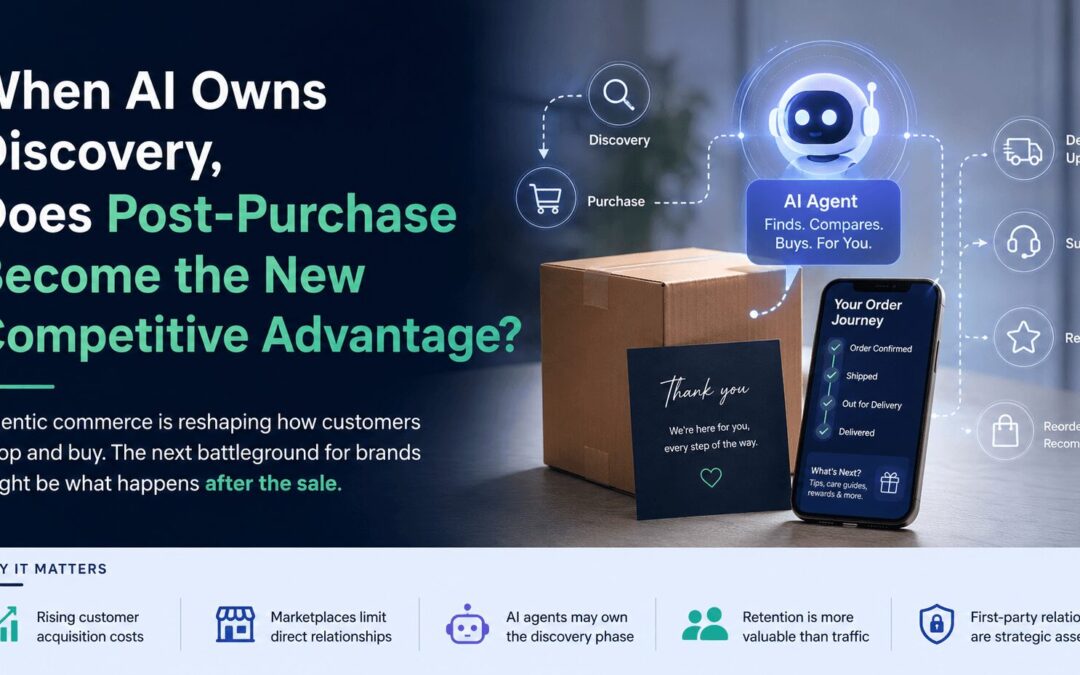
The retail industry has spent the last two decades optimizing the customer journey before the purchase.
Brands compete aggressively in:
-
Product discovery
-
Search and marketing
-
Personalization
-
Checkout optimization
-
Conversion rate improvements
But a new question is emerging:
How will brands continuously engage, retain, support, and monetize customers after the purchase?
This question is becoming increasingly important as AI-powered shopping assistants and agentic commerce begin reshaping how consumers discover and buy products.
The Shift Toward Agentic Commerce
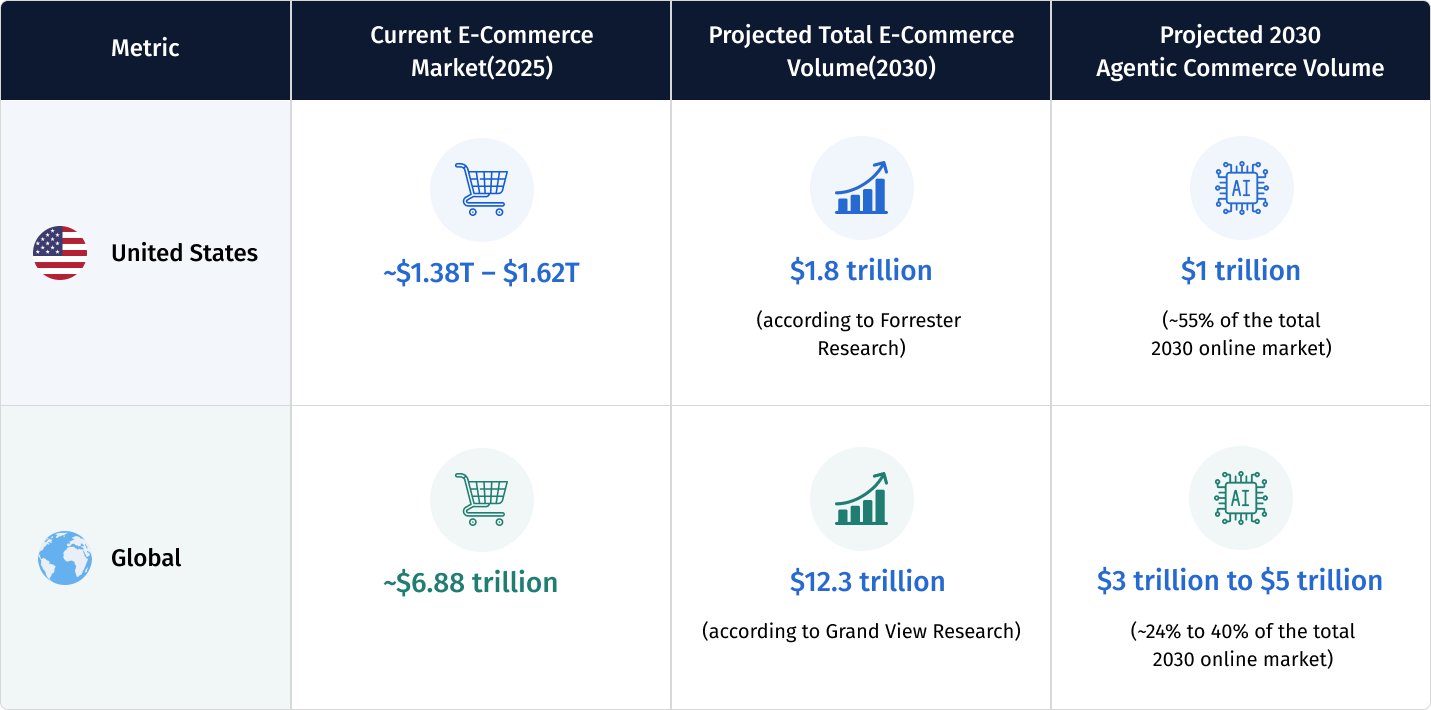
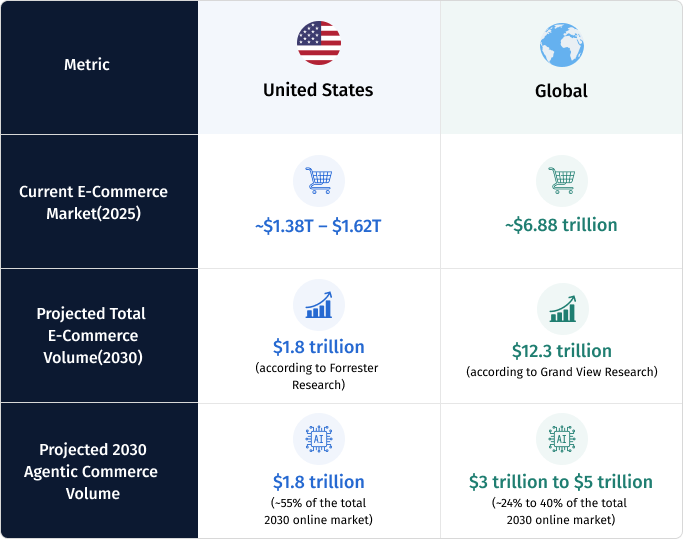
According to McKinsey, agentic commerce could influence between $3 trillion and $5 trillion of global commerce by 2030, while the U.S. market alone could see up to $1 trillion in agent-mediated retail activity.
Comparison of E-Commerce Volume:
The supporting ecosystem is also evolving rapidly. Emerging standards and protocols such as MCP (Model Context Protocol), Agent-to-Agent interactions, Agent Payment Protocols, and Universal Commerce Protocol (UCP) are being developed to help AI agents interact directly with merchants, services, and commerce platforms.
Whether these projections materialize fully or partially, one trend is becoming difficult to ignore:
AI is steadily moving closer to the customer decision-making process.
Why Post-Purchase Engagement Matters More Than Ever
Several industry forces are converging:
-
Customer acquisition costs continue to rise.
-
Marketplaces often limit direct relationships between brands and customers.
-
AI agents may increasingly control discovery and product selection.
-
Customer retention is becoming more valuable than customer acquisition.
-
First-party customer relationships are becoming strategic assets.
Historically, brands invested heavily in attracting visitors to their websites and converting them into buyers.
But what happens if future shoppers increasingly rely on AI agents to discover products, compare options, and even complete purchases?
In that world, the post-purchase experience may become one of the few moments where brands can build meaningful, long-term relationships with customers.
The Untapped Opportunity
Many retailers still view post-purchase communication primarily as an operational necessity:
-
Order confirmations
-
Shipping updates
-
Delivery notifications.
-
Returns and refunds.
However, these touchpoints represent far more than transactional messages.
They can become opportunities for:
- Personalized product education
- Loyalty and rewards engagement
- Warranty and product registration
- Subscription and replenishment journeys
- Customer support automation
- Community building
- Cross-sell and upsell experiences
- Feedback and review collection
- Sustainability and digital documentation initiatives
The post-purchase phase is often the longest stage of the customer lifecycle, yet it frequently receives far less innovation investment than acquisition and conversion.
The Emerging Challenge for Brands
As AI increasingly mediates the path to purchase, brands may face a new challenge:
How do you maintain a direct relationship with customers when discovery and purchasing are increasingly handled by intelligent agents?
The answer may not lie in improving advertisements or search rankings alone.
It may depend on building richer post-purchase ecosystems that continue delivering value long after the transaction is complete.The brands that succeed over the next few years may be those that view post-purchase engagement not as a support function, but as a strategic growth channel.

Looking Ahead
The future of commerce will likely involve a combination of traditional customer journeys, AI-assisted shopping experiences, agentic commerce, and connected omnichannel ecosystems.
While much of the industry conversation continues to focus on product discovery and conversion, the next major opportunity may be hiding in plain sight:
What happens after the customer clicks “Buy”?
That is where loyalty is built, trust is earned, and long-term customer value is created.
Ready for the AI-Driven Post-Purchase Era?
The future of commerce isn’t just about helping customers buy it’s about continuing to engage them long after the purchase. As AI increasingly transforms product discovery and purchasing, the post-purchase journey will become one of the few opportunities for brands to build lasting customer relationships.
At InvoTools, we’re helping retailers prepare for this future by transforming digital invoices, receipts, and customer communications into connected post-purchase experiences. The result is a smarter engagement layer that strengthens customer relationships, improves retention, and creates new opportunities for growth.
Ready to see what’s possible?
Schedule a Discovery Session and discover how InvoTools can help turn every transaction into the beginning of a stronger customer relationship.

Interested in Exploring This Further?
The future of commerce isn’t just about helping customers buy it’s about continuing to engage them long after the purchase. As AI increasingly transforms product discovery and purchasing, the post-purchase journey will become one of the few opportunities for brands to build lasting customer relationships.
At InvoTools, we’re helping retailers prepare for this future by transforming digital invoices, receipts, and customer communications into connected post-purchase experiences. The result is a smarter engagement layer that strengthens customer relationships, improves retention, and creates new opportunities for growth.
Ready to see what’s possible?
Schedule a Discovery Session and discover how InvoTools can help turn every transaction into the beginning of a stronger customer relationship.