Ecommerce brands invest heavily in attracting new customers and converting them into buyers. Yet many overlook what happens after the purchase. The post-purchase journey is one of the most valuable opportunities to build customer loyalty, increase repeat purchases, improve customer lifetime value, and turn one-time buyers into long-term customers. Every order creates a new opportunity to strengthen the customer relationship.
This is where transactional emails make a real difference. Order confirmations, shipping updates, invoices, warranty registrations, and product care emails are more than operational notifications, they are trusted customer touchpoints. When used strategically, they become the foundation of an effective post-purchase engagement strategy that builds trust, educates customers, encourages future purchases, and drives long-term business growth. After all, the sale is not the end of the customer journey; it is the beginning of your most valuable engagement opportunity.
Every Ecommerce Brand Has a Hidden Revenue Opportunity
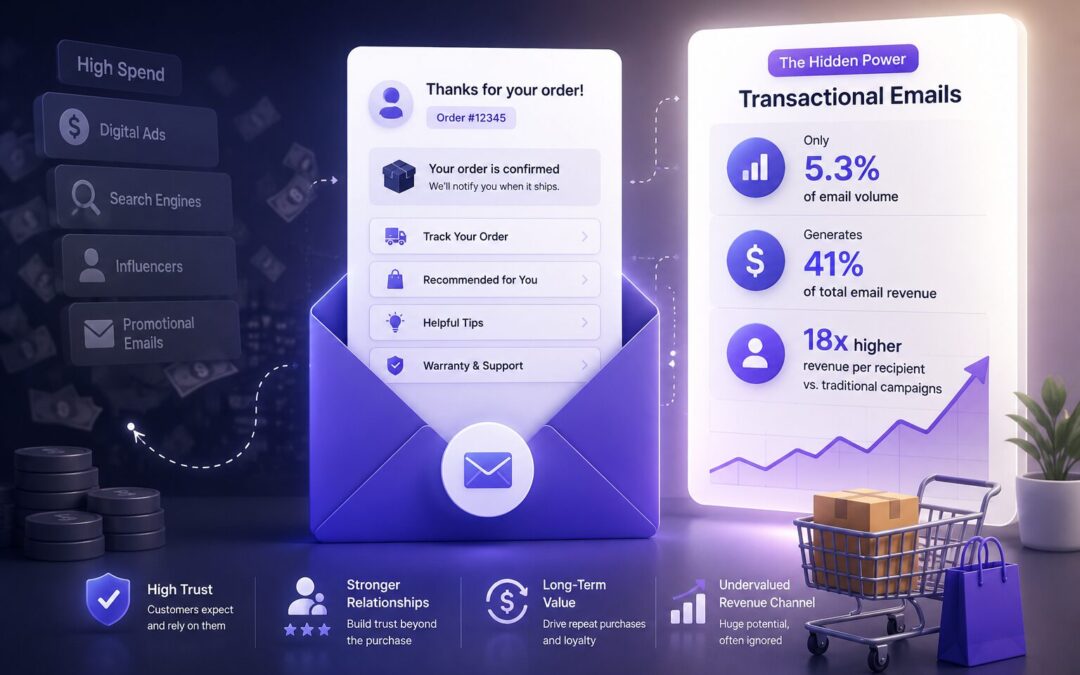
Every year, ecommerce businesses invest millions of dollars in acquiring customers through digital advertising, search engines, influencers, and promotional email campaigns. Yet one of the most trusted customer touchpoints the transactional email is often treated as nothing more than a receipt, invoice, or shipping notification.
But what if the email confirming an order could generate more long-term business value than the email promoting the next sale?
That opportunity already exists.
According to Klaviyo’s Ecommerce Benchmark Report, automated email flows account for only 5.3% of total email volume, yet generate nearly 41% of total email revenue. Even more impressive, the average revenue per recipient is nearly 18 times higher than traditional email campaigns.
The numbers clearly show that post-purchase communications deserve far more attention than they receive today.
This raises an important business question: Why are companies investing millions to acquire customers while underutilizing one of the highest-trust communication channels they already own—the transactional email?
Every Transaction Is a High-Value Customer Touchpoint
Most businesses view transactional emails as operational communications. Examples include:
- Order confirmation
- Invoice
- Receipt
- Shipping notification
- Delivery confirmation
- Refund notification
- Password reset
- Account verification
These emails do much more than confirm a transaction.
They reach customers at the exact moment they are most engaged with the brand. Customers actively look for these emails because they contain important information about a purchase they have just completed.
Every invoice, receipt, or shipping update becomes a valuable opportunity to build trust, strengthen customer relationships, and continue the conversation after the sale.
Why Customers Pay Attention to Transactional Emails
Transactional emails work because they match customer intent.
The customer has already placed an order, completed a payment, or requested information. The email is not interrupting the customer—it is helping them complete their journey.
This creates two powerful advantages.
High Customer Intent
Customers are already engaged and waiting for the information. Their attention is naturally focused on the communication.
Rich Transaction Context
Unlike promotional emails, transactional emails already know important details such as:
- What the customer purchased
- Purchase value
- Product model
- Quantity
- Delivery status
- Warranty period
- Payment method
- Previous purchase history
This information makes it possible to deliver highly relevant and personalized experiences.
The Million-Dollar Opportunity Hidden in Every Million Emails
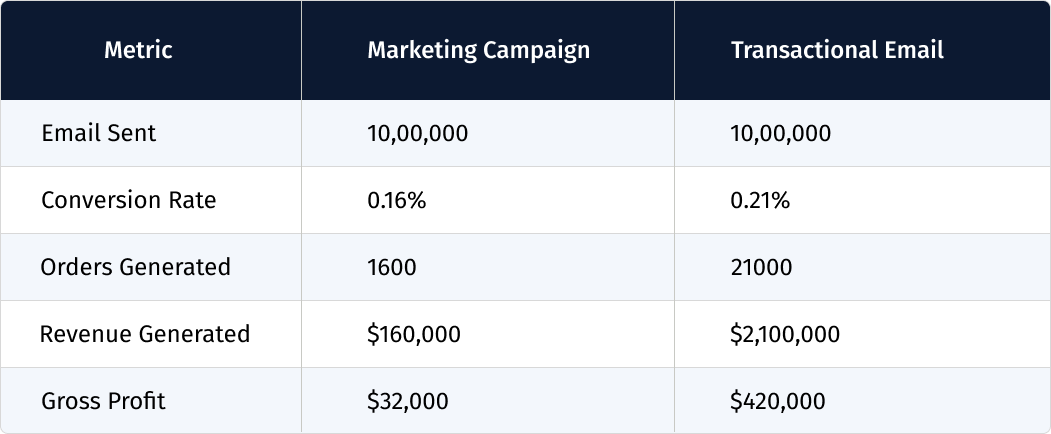
To understand the business impact, consider the following conservative ecommerce scenario.
Business Assumptions
- Total Emails Sent: 1,000,000
- Average Order Value (AOV): $100
- Gross Profit Margin: 20%
- Gross Profit per Order: $20
Now compare a traditional promotional email campaign with a well-optimized transactional email program.
What This Means
For the same volume of one million emails, a well-designed transactional email strategy could generate:
- 13× more customer orders
- 13× more revenue
- 13× more gross profit
- An additional $388,000 in gross profit
Looking at efficiency makes the difference even clearer.
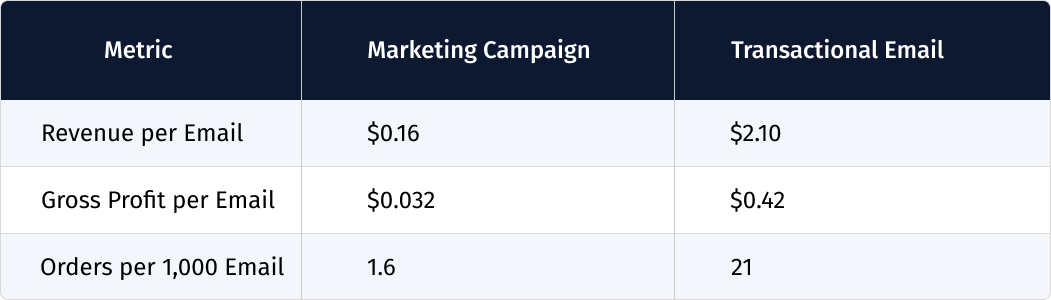
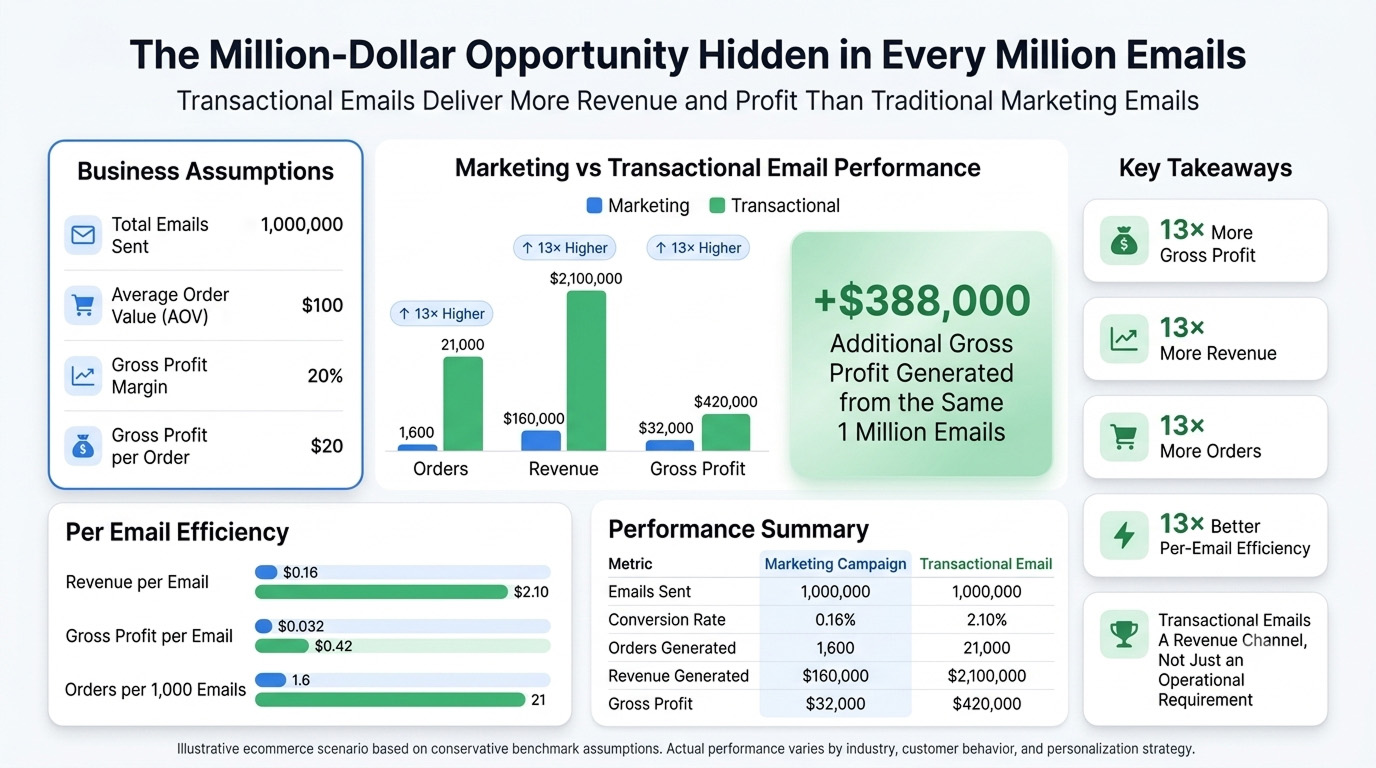
These figures show why transactional emails should be viewed as a business asset rather than simply an operational requirement.
Note: The figures above use representative ecommerce benchmark conversion rates for illustration. Actual performance varies depending on industry, product category, customer base, and personalization strategy.
Revenue Doesn't End at Checkout
Many ecommerce businesses think the customer journey ends after payment.
In reality, it is only beginning.
A modern post-purchase journey might look like this:
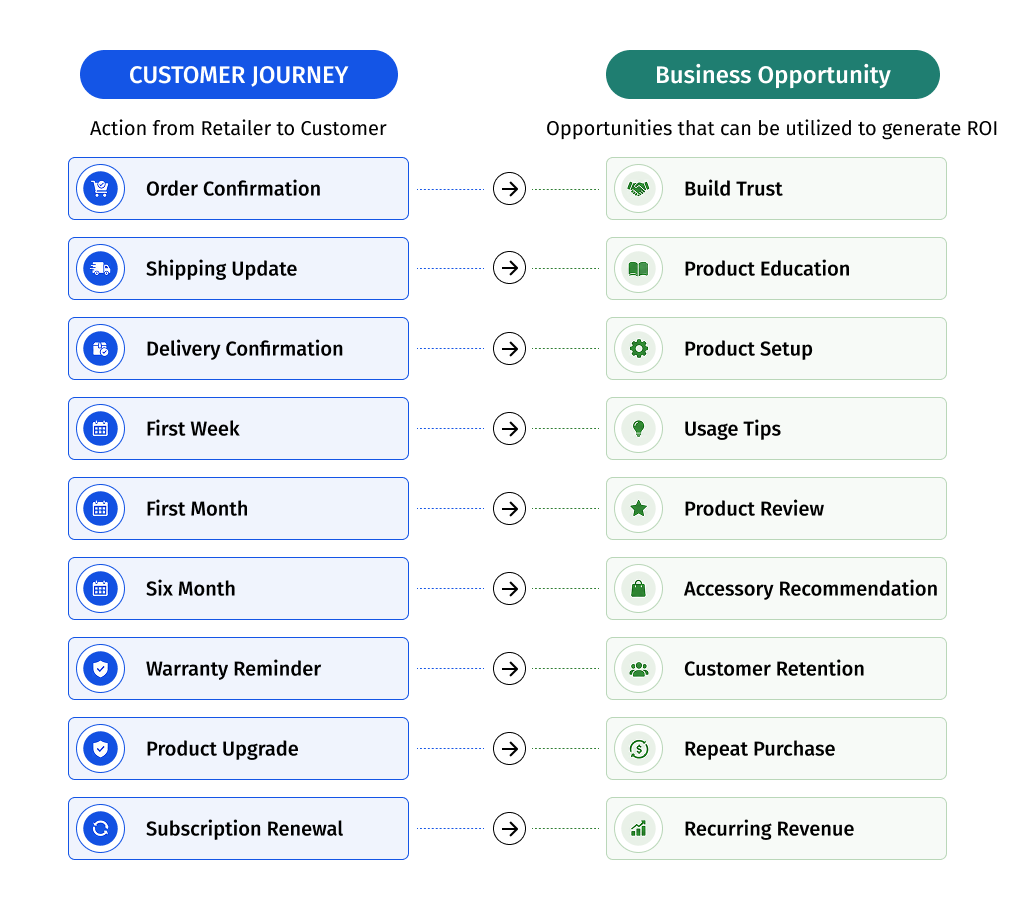
Every interaction creates another opportunity to help the customer while strengthening the relationship and generating additional revenue.
Beyond Revenue: The Hidden Business Benefits
Transactional emails create value far beyond direct sales.
They help improve:
- Customer trust
- Customer satisfaction
- Repeat purchases
- Brand loyalty
- Customer Lifetime Value (CLV)
- Product reviews
- Warranty registrations
- Referral participation
- Cross-selling
- Upselling

Beyond Revenue: The Hidden Business Benefits
Transactional emails create value far beyond direct sales.
They help improve:
- Customer trust
- Customer satisfaction
- Repeat purchases
- Brand loyalty
- Customer Lifetime Value (CLV)
- Product reviews
- Warranty registrations
- Referral participation
- Cross-selling
- Upselling
They can also reduce customer support costs by answering common questions before customers need to contact support.
For example:
- Where is my order?
- Did my payment go through?
- Where can I download my invoice?
- How do I install the product?
- What is my warranty coverage?
- How do I return the product?
Providing these answers within the email improves the customer experience while reducing support requests.
The Future Is Intelligent Transactional Communication
Artificial Intelligence is making ecommerce experiences more personalized than ever.
One of the biggest opportunities lies in transactional emails.
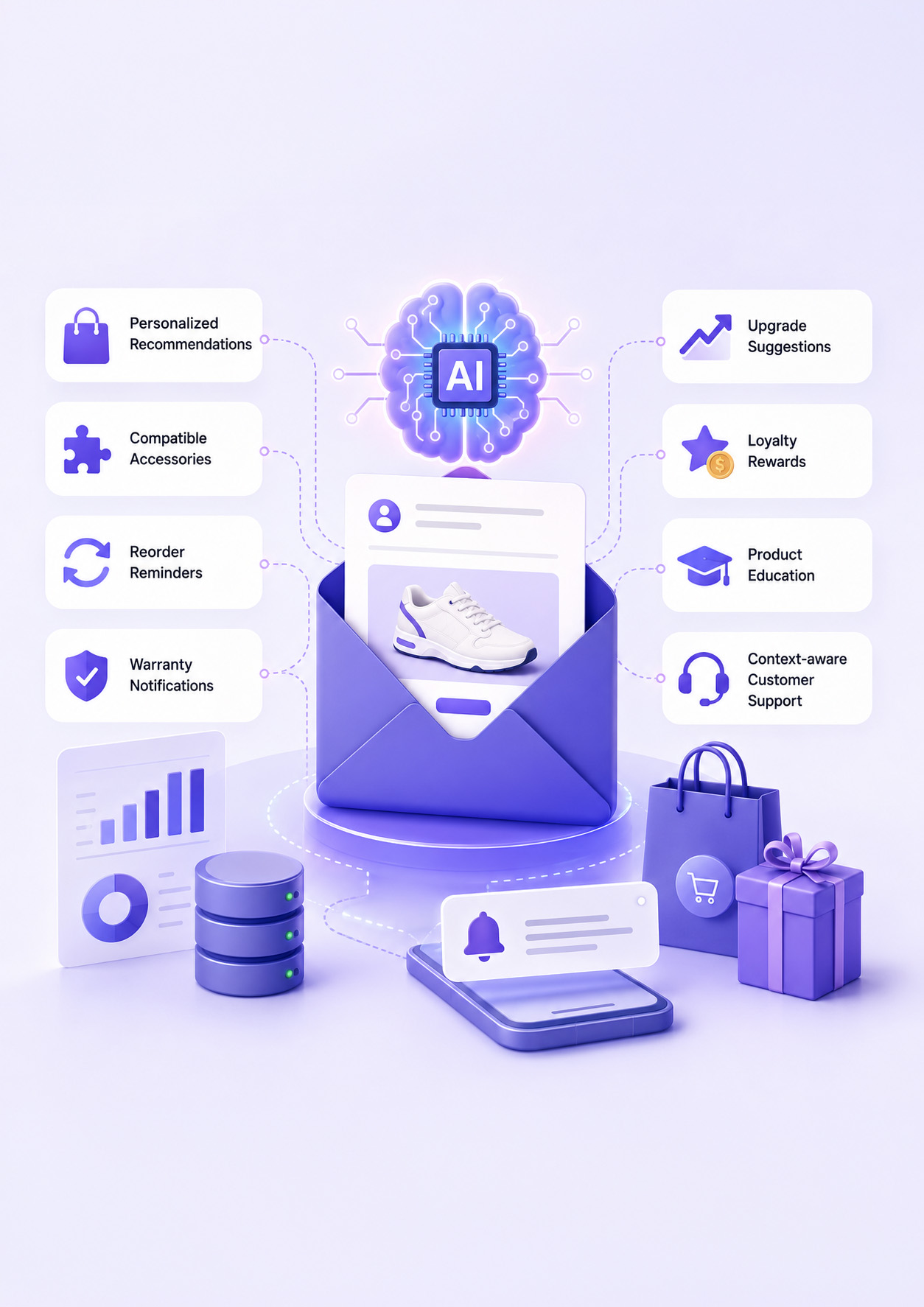
Using transaction data, AI can deliver:
- Personalized product recommendations
- Compatible accessories
- Reorder reminders
- Warranty notifications
- Upgrade suggestions
- Loyalty rewards
- Product education
- Context-aware customer support
Instead of being simple notifications, transactional emails can become intelligent customer experiences that provide the right information, recommendations, and support at the right time.
The Future Is Intelligent Transactional Communication
Artificial Intelligence is making ecommerce experiences more personalized than ever.
One of the biggest opportunities lies in transactional emails.
Using transaction data, AI can deliver:
- Personalized product recommendations
- Compatible accessories
- Reorder reminders
- Warranty notifications
- Upgrade suggestions
- Loyalty rewards
- Product education
- Context-aware customer support
Instead of being simple notifications, transactional emails can become intelligent customer experiences that provide the right information, recommendations, and support at the right time.
The Way Forward
The customer journey does not end at checkout. Every order confirmation, shipping update, invoice, warranty email, and delivery notification is an opportunity to educate customers, build trust, strengthen loyalty, and encourage the next purchase. Brands that treat transactional emails as part of a broader post-purchase engagement strategy create better customer experiences while increasing customer lifetime value.
This is where platforms like InvoTools make a difference. Rather than replacing your existing ecommerce or email platform, InvoTools enhances the transactional communications customers already expect by transforming them into personalized engagement experiences. By enriching invoices, receipts, order confirmations, and shipping notifications with relevant product information, contextual recommendations, support resources, loyalty updates, and AI-powered insights, brands can deliver more value without increasing promotional email volume.
As customer acquisition costs continue to rise, the smartest growth strategy may not be finding more customers, it may be creating more value from every customer you already have. Post-purchase engagement is no longer an afterthought; it is becoming a competitive advantage. Platforms like InvoTools help ecommerce brands turn that opportunity into measurable business growth by making every post-purchase interaction more meaningful.
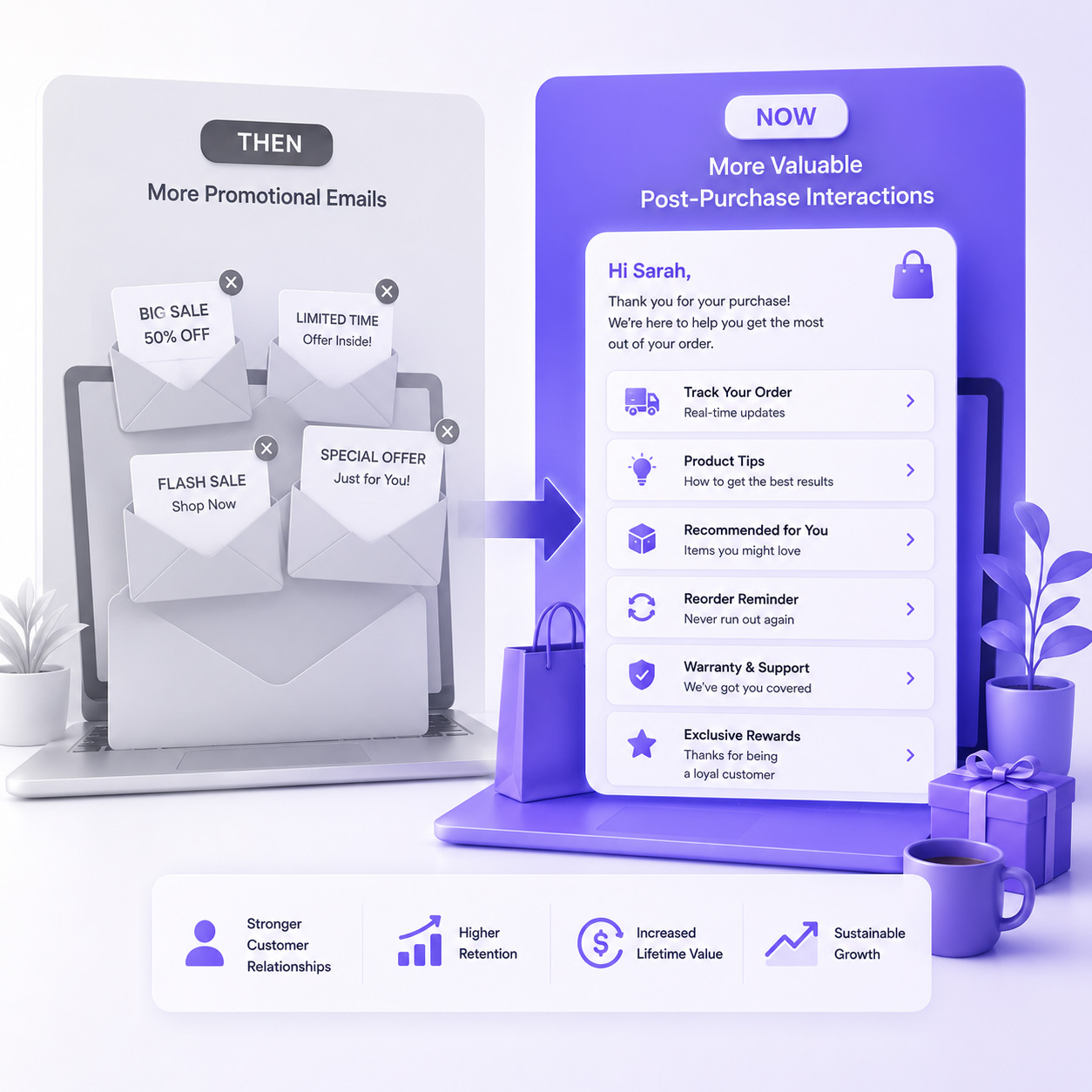
Is Your Post-Purchase Journey Creating Value?
Every completed order creates a new opportunity to build loyalty, increase customer lifetime value, and drive repeat purchases. The question is: are you making the most of it?
Is Your Post-Purchase Journey Creating Value?
Every completed order creates a new opportunity to build loyalty, increase customer lifetime value, and drive repeat purchases. The question is: are you making the most of it?